
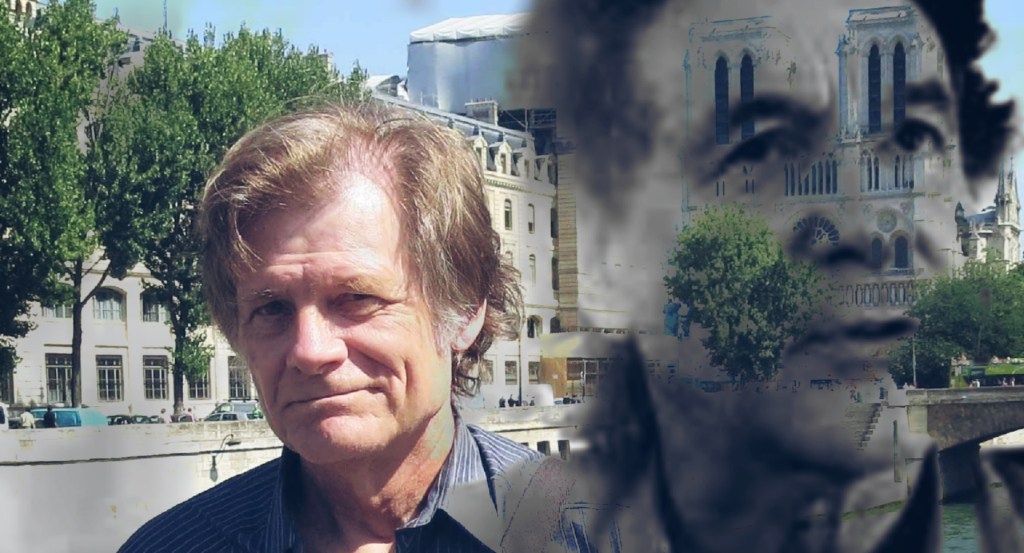
Levinson’s Quantum Foam
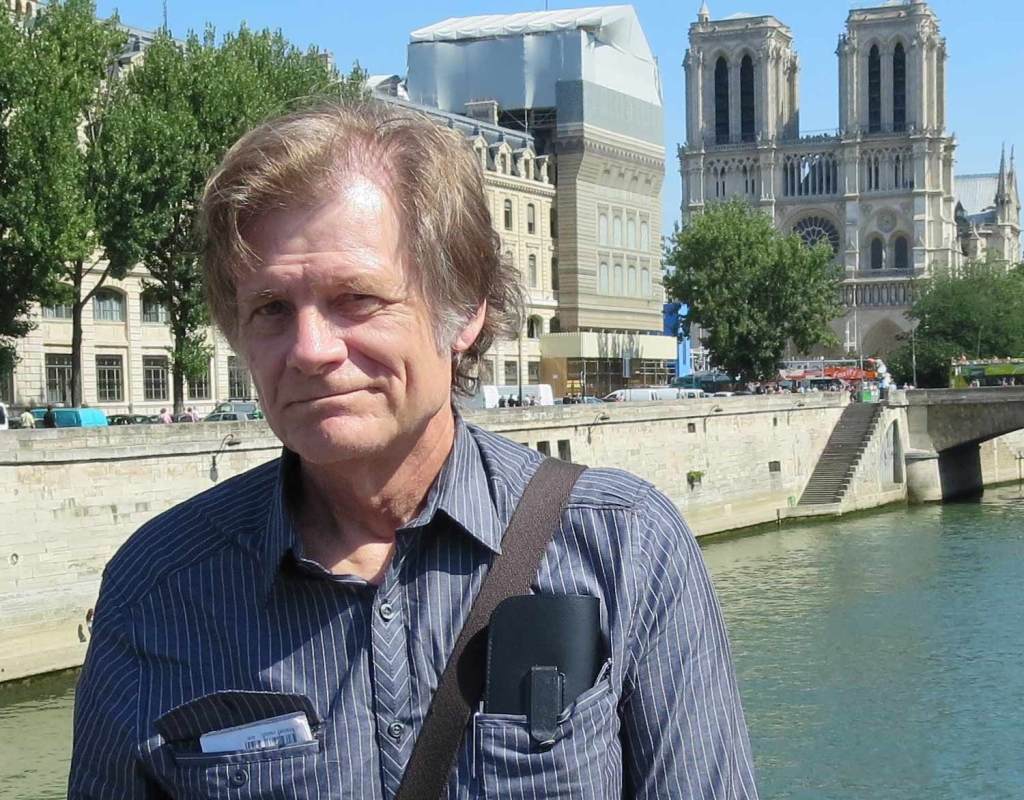
The task ahead of me is as alluring as it is frustrating. Any description of what Heller Levinson does with words cannot be hemmed in by conventional means. It’s so completely anything. It’s so unutterably utterable. Substantives are packed together like magnets in a generator. Electrical power is increased by the voltage of an urgent grammaticality. Urgent means urgent. Emergent. Insurgent. Berserk and clamorous. It’s that urgency to see what’s on the other side of your mind.
Everyone has it to one degree or another. It’s a frontier thing. A dissipation of borders. Virtual particles are constantly popping in and out of existence. This phenomenon is often referred to as quantum foam. Heller calls it Valvular Ash. He calls it Lurk. He calls it Shift Gristle. He calls it Wrack Lariat and Query Caboodle. He calls it as he calls it. “laurel sling.” “carrion fletch.” “hymnal meditation.” “barbarous clarity.” “pharyngealglobetilt globule melt” The desire to be a poet is monumentally weird. Especially for us old guys. Things get gutsy in old age. We find ourselves, to quote Levinson, flirting with vacancies. The grief and frustration of losing things. Which is why language was invented: it’s a net, not to drag the dead from their
lairs, but to ensnare a living testament of our depths, our unencumbered enthusiasms, and confront the living with a language “shriek[ing] molecular malfunction.” There’s a fugitive instinct driving everything forward, a fanatic demand inherent in anyone’s language, and a fierce reality when it’s released.
The Vikings navigated by observing how light passes through sunstone at different angles. Heller dispenses with syntax, conjunctions, and prepositions, and navigates by spring and spaghetti. His palate is a palette of vibrato truancies and “jargon armatures” buoyant as a brush touched lightly on a cymbal. It’s a jambalaya of insubordination, a bouillabaisse of vicissitude. And sometimes
he’ll issue a recipe: “Put everything you got into a pot & you got potpourri.”
We find the world with words. “The limits of our language are the limits of our world.” Said Ludwig Wittgenstein. This is especially true now when languages are everywhere imperiled by censorship, asphyxiated by thought police and political agendas. If you’re looking for a way out of that, this might be your ticket. Think of it as a zone where the mind can browse at ease. Nothing is stable. Even in a seemingly empty space, there is a constant fluctuation of energy that can manifest as an Airedale terrier or a fermentation of wild yeast and bacteria. How could it be otherwise? In the inescapable flux, there is something that abides. Something that heals our lacerations. Something outside the norm, outside academy seminars, outside the routines of our everyday selves doing everyday things. Maneuvering a life of googly anomalies around a world of experiential furniture, variable phenomena such as feeling, consciousness, time, location,
perception, space, et cetera. And the people who write about it, and take menial jobs, and live alone, and don’t have children. And the people who work in cubicles and go to bars to find common ground and uncommon sex. And the people who dance and the people who don’t. And the people who have acclimated themselves to debt. And the people in the mountains who read the clouds. And the people who take the subway and glue themselves to a simulacrum in a mobile phone. Heller keeps time on a heliotropic snare. It’s an ongoing “splash of pulsation,” a
language presented in word heaps, in “jug[s] of existence,” “in random joyous helter skelter.” “The things we truly love, the things forming the basis and roots of our being, are generally things we never look at. A huge piece of carpeting, empty and naked plains, silent and uninterrupted stretches with nothing to alter the homogeneity of their continuity. I love wide, homogenous worlds, unstacked, unlimited like the sea, like high snows, deserts, and steppes.” Wrote Jean Dubuffet.

It’s why I like open spaces such as one finds on the plains of North Dakota and eastern Montana. Or why I gravitate toward works that occupy space in a way that expands it, plays with it, branch out with planar shapes such as Alexander Calder’s mobiles, moving randomly in response to air currents. Levinson’s verbal constructions behave in a similar manner, allowing much of the page
to remain blank, signaling a voluptuous interplay between open volume and the density of word aggregates, contrasting a semiotic mass with the absence surrounding its utterances, the intensity of its intent, which is a thoroughfare of presence beyond the appetites of the intellect, tantalizing and teasing the associative impulses of the mind with its queries, its quarries, its quarks and
quirks, its Query Caboodle. The seep of its cadence, the lurk of its asymmetries.
Over the years, Levinson has frequently referenced what he calls his Hinge Theory, ostensibly a method of assemblage, a kind of unhinged methodology granting and stimulating the free and open swing of the doors of perception, drawing out the deeper fermentations of semantic intoxication. A pioneer of structural linguistics, Roman Jakobson, describes a form of aphasia called the Contiguity Disorder, which diminishes the extent and variety of propositioning sentences and
augments the discreteness of substantives and predicates, defamiliarizing their grammatical function and augmenting their palpability, their capacitance as individual entities. “The syntactical rules organizing words into higher units are lost,” writes Jakobson, “this loss, called agrammatism, causes the degeneration of the sentence into a mere ‘word heap.’ Word order becomes chaotic; the ties of grammatical coordination and subordination, whether concord or
government, are dissolved. As might be expected, words endowed with purely grammatical functions, like conjunctions, prepositions, and articles, disappear first, giving rise to the so-called ‘telegraphic style,’ whereas in the case of a similarity disorder, they are the most resistant.” While Jakobson describes this phenomenon in terms of pathology, I would describe its anomalies more along the lines of a deliberate rebellion, a coup against homogenization.
Take “Parterre,” on page 54 of Valvular Ash. It’s a poem of three lines whose affiliations are completely ambiguous, and therefore highly evocative. “obligingly intersections pursuant follow the outline / the flux warden lives over the hill / enshrubbed by proximity in the spine of the alliance.” The references to outline, warden, proximity, and alliance are ironic, given the poem’s non-Euclidean disposition toward linearity and its appetite for variables that cannot be graphed
on a normative grid but are arbitrarily conjoined on a page that refuses all restrictions. That a flux might require a warden is an oxymoronic joke. It is in the nature of flux to resist policing. Parterre – “a level space in a garden or yard occupied by an ornamental arrangement of flower beds” – illustrates how the effort to participate in the realization of a poem and its structural dynamic leads to a mediation in which one loses a clear sense of boundary and reaches beyond it
to what is other. That is, the reader enters into a partnership with the artwork so that it will speak. “The sensibility of the artist is essentially the capacity to hear what is transpiring within the material, to see with the work’s own eyes,” declared Theodore Adorno. “Subjective reactions such as disgust for the suave, a motive force in new art, are elements of resistance to the heteronomous social order that have migrated into the sensorium.” Leaves never rest. Waves are always waving. There is a kineticism in even the most stubborn forms. Levinson’s flux is a codicil to the failures and shortcomings of our society, its burgeoning technofascism, and oligarchic control. Its energy is joyful and its aesthetic is primal, à la Art Brut
and Outsider Art. “There is no art without intoxication,” wrote Jean Dubuffet. “But I mean a mad intoxication! Let reason teeter! Delirium! The highest degree of delirium! Plunged in burning dementia! Art is the most enrapturing orgy within man’s reach. Art must make you laugh a little and make you a little afraid. Anything as long as it doesn’t bore.”

 SULFUR EDITIONS
Leave a comment