
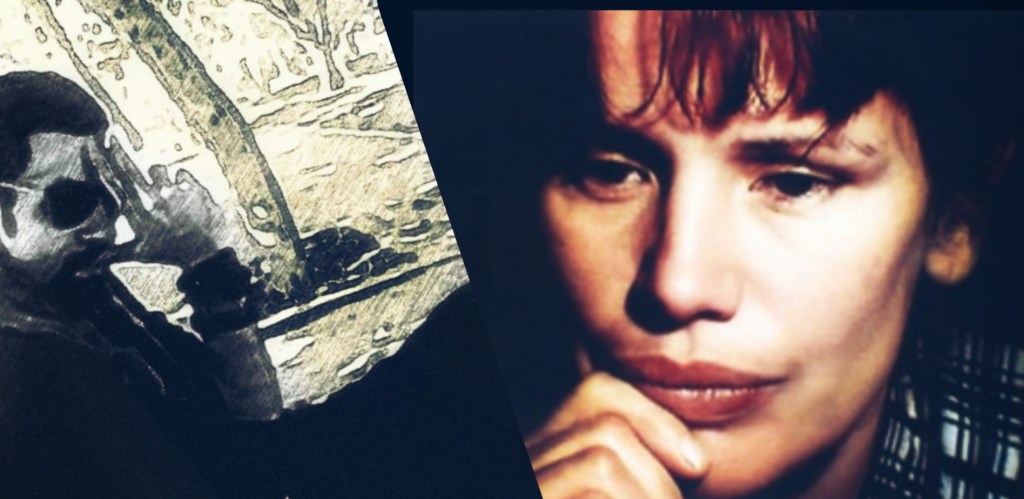
Catherine Belkhodja, born in Paris, is a Franco-Algerian artist and journalist who grew up in Paris
and Algiers, where she wrote her first short stories.
She pursued studies in theatre, music, fine arts, took her first steps in cinema and returned to Paris
to study architecture, philosophy, town planning and ethnology in the Maghreb.
Graduated in philosophy, she began to earn a living in education, then as an architect, model
maker and urban planner. She obtained a degree in logics and a master’s degree in Aesthetics at
the Sorbonne with Olivier Revault d’Allones. She specialized in scenography and bio-climatic
architecture in Belgium (solar architecture) and in Egypt with Hassan Fathy (earth architecture).
On returning to Paris, she earned her living as an actress, journalist in the written press (le
Sauvage, Sans Frontière) then on the radio and television. She joined Gamma TV, and
participated in several TV or radio broadcasts, in the Culture or Society sections, then in
newspapers on Asia. Philippe Alfonsi entrusted her with the concept and presentation of the
magazine TAXI, which obtained the prestigious French Award Sept d’Or. Catherine received her
guests in her Cadillac which was driving around Paris at night.
The TAXI program was very innovative in terms of image quality, the care given to the
framing, the light and slightly insolent tone and very unconventional atmosphere compared
to the television news of the time. At first, the broadcast seemed too innovative and
shocked the audience. Then it became very popular and brought together 3 million viewers,
which was a lot for a Friday night!
Catherine joined the cinema and intervened in several films as an actress, assistant, then director.
(Experimental films, reports or documentaries). She wrote short stories, songs and recorded a
music album with music by Jacques Higelin, Claude Sacre, Sébastien Régnier and Gabriel Yared
for producer Pierre Coulon. She directed “Lost Reflections of the Mirror” in Algeria, participated in
“Roots and Wings, Me, Mosaics, Oceanics, Special Envoy…She became a regular collaborator of
Chris Marker (assistant, voice, commentary, co-dialogue writer, producer) who offered her to
become the central figure of SILENT MOVIE then of LEVEL FIVE.
I knew that Chris Marker really appreciated my work and that he had taken the trouble to
write it to my producer Philippe Alfonsi. I had met Chris several years earlier when he was
still leading film workshops for Peoples and Cultures. Dominique Païni had contacted him
to present films to teenagers and we had a long discussion after the screening. Our second
meeting was very fortuitous since we met in the newsroom of “The Legend of the Century”
where I was working at the time, for Roland Castro. I had contacted several producers to
propose a television program on Philosophy with Marc Sauter (one of the inventors of
CAFES-PHILO) But the producers thought that Philosophy was not “mainstream” enough!
“. Nevertheless, the Fit production ended up contacting Chris Marker to offer him a program
on Greek philosophy. This project became a 12- episode- series.


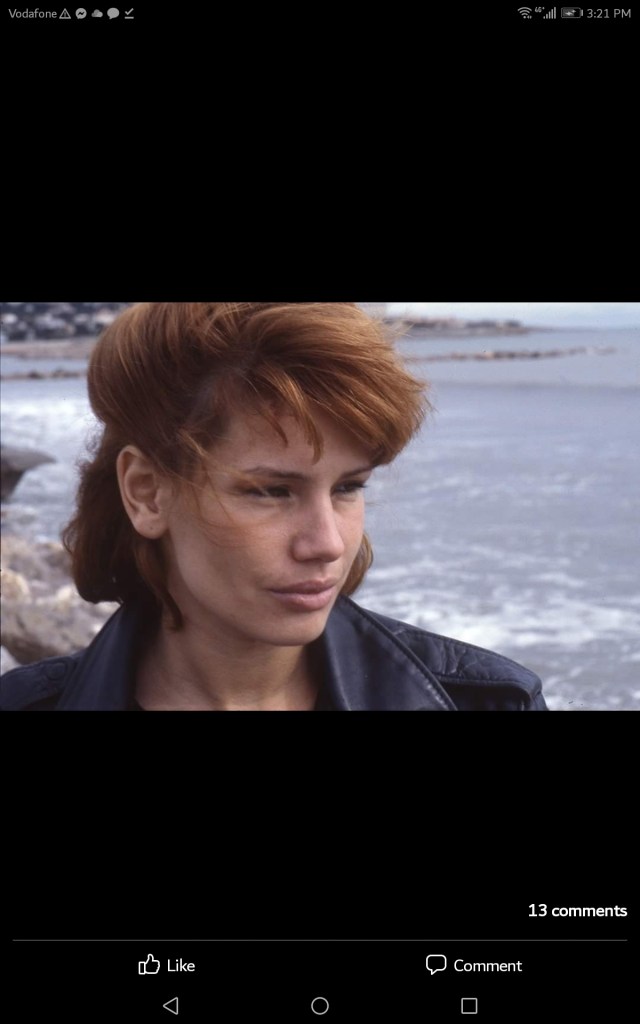


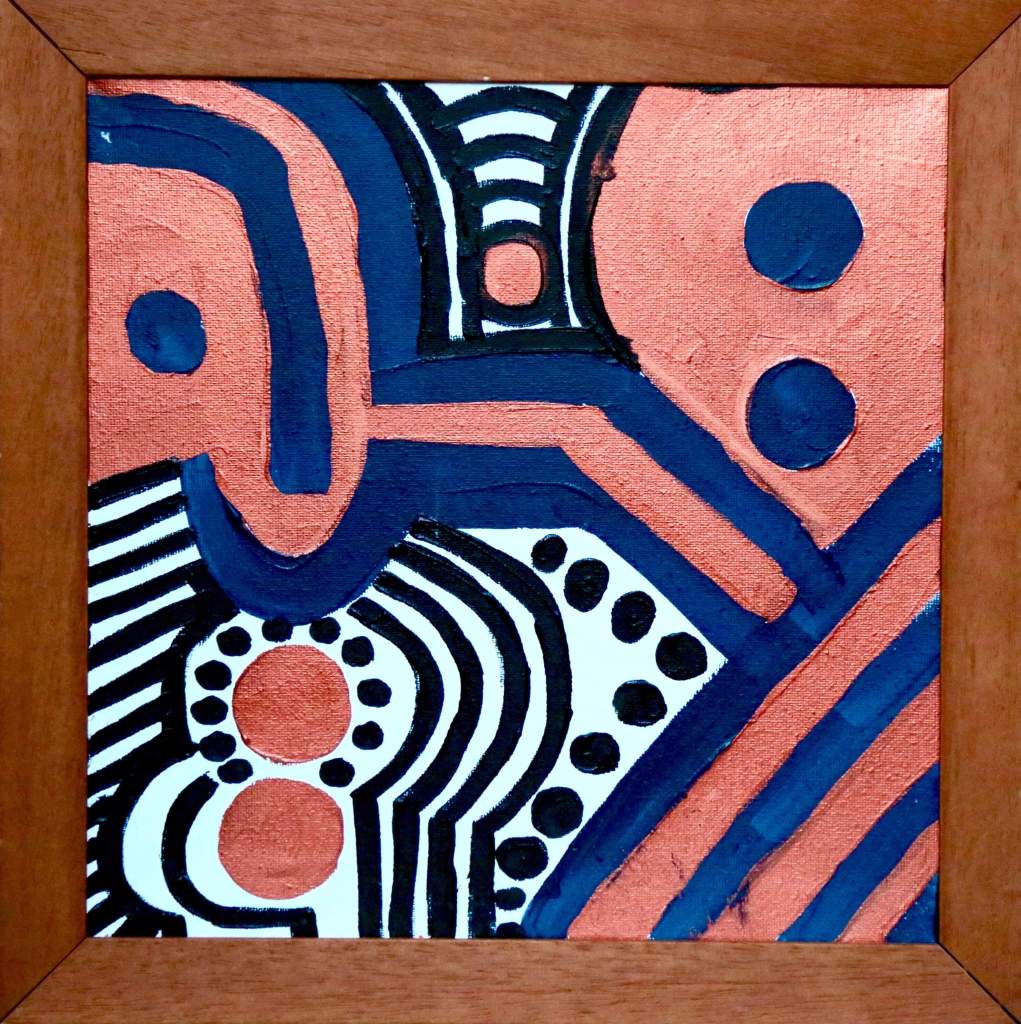

“The Owl’s Legacy.” “Chris wanted me to be present in the first episode on Plato’s Banquet.
I had to interpret a muse: I punctuated the speeches of the philosophers with my lyre. It was
our first collaboration which continued for more than thirty years! “Level 5” is a fictional
film including real documentary footage of the Battle of Okina, during World War II. The film
addresses the issue of new communications technologies and nuclear technology and
shows how technology is redefining epistemology; “Level five” deals with the evolution of
the human mind through the ages. I play Laura, a woman desperately trying to
communicate with the man she loves.
We laughed a lot and worked with great pleasure. Chris often gave me the keys to his loft so
I could come and work on his machines when he was away. It was with him that I learned to
edit “directly useful» (and not by successive rush reduction). I proceeded by association of
ideas, images or sounds to edit “seamlessly”! But for me, the text was often privileged
because I have a very fluid and spontaneous writing. Chris suffered more to write his texts
and complained about having to work on them a lot before being fully satisfied.
For me, his writing remains fabulous and I always watch his films with pleasure. He had
spoken to me at length about the LEVEL FIVE project which was so close to his heart. He
absolutely wanted to entrust me with the role of Laura but considered that I was still too
young to embody this character. In cinema, it often happens that directors offer roles to
actresses but in the end the films are not made or the film is offered to other more famous
ones. This is why I did not consider this proposal as really serious.
I was happy to participate to his films and we had a great intellectual and artistic bond. I
was doing my other projects at the same time.
Chris also liked to work on several projects at the same time. Thus, Michael Shamberg had
commissioned a clip from him for an English rock band: New Order. I could not have
imagined at the time that some of these images, shot at the Parc du Sauvage, would be an
integral part of the future film LEVEL FIVE. Chris loved to hack images on all the movies
that were shown on different channels. Sometimes he even plundered his own! So when we
shot the footage for Silent Movie, a video installation through silent cinema, I had no idea
he would also save some footage for Level Five. Chris sometimes edited several films at the
same time, the images of which I only discovered during the final edit. I took part in the
filming but only discovered these pirouettes at the end! This SILENT MOVIE installation,
commissioned for the Wexner Center, was later taken over by the Moma of New -York and
then traveled to the greatest museums in the world.
Chris liked to surprise me by sometimes making me shoot without me knowing what he
intended his images for! He also liked to use my images in certain installations without
always specifying that I was the author. He claimed the “freedom to plunder” and
considered that everyone could use the images of others as they pleased. Now that his
heirs monitor the use of any image, things have become more complex, especially if it is my
own images!
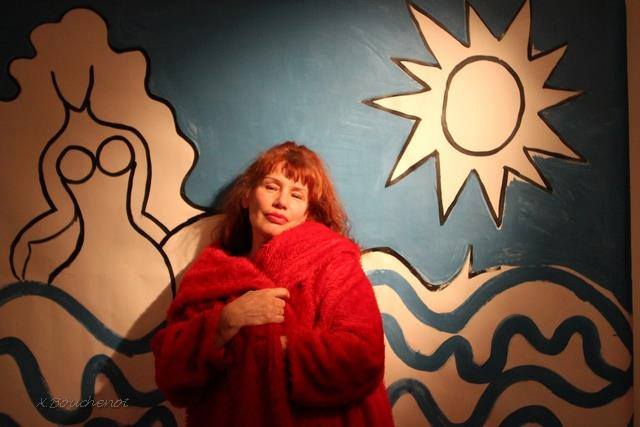
His death was a terrible shock and it took me a few years to recover because
our moments of shared creation were particularly precious.
He had developed DIALECTOR software which gave the illusion of being able to continue to
communicate beyond death. Our bond lasts far beyond death.
Catherine Belkhodja
LEVEL FIVE and SILENT MOVIE are only a small part of Catherine Belkhodja’s production
process, represented in several short and feature films as an actress, dialogue writer, director or
producer. She is also a playwright and has written and directed several plays (HEUREUX COMME
UN ROI, ECALADE CLANDESTINE, MACADAM) or adaptations (LE DEPAYS by Chris Marker
(with Etienne Sandrin), SPLENDIDES EXILEES. She also wrote numerous articles on theatre,
dance, literature, cinema or painting. Through her publishing house KAREDAS, she has also
published books including several collections of haikus. As a painter, she exhibits in various
Parisian galleries but also organizes numerous events as artistic director. We will dialogue with her
to evoke various memories linked to her multiple creations.

1
Paris and Algiers / Two cities that shaped Catherine Belkhodja in her early years
According to your oriental origins, east and west meets within Catherine Belkhodja . Tell us about this relationship and its impact on your artistic career.
The marriage of the West and the East quite simply began with the marriage of my parents who met in Paris and never left each other. My father, Algerian, of Berber origin by his mother, and Turkish/Mongolian by his father left Algeria on his father’s death to come and earn a living in France. After a whole classic journey of emigrating to a new country, he had to find accommodation, a job. He met my mother, who was French, and they decided to get married. They had three daughters. I am the eldest. It was not easy for my mother to get her family to accept an Algerian husband. Especially since both were very involved in the fight for the independence of Algeria. When I was little, I saw very little of my parents who were very busy with their work, their studies and their political activity. It was therefore mainly my grandparents who took care of us and my mother tongue was French. I only discovered Algeria a few years later, when I entered college and I was very happy to discover a language, a sunny and colorful country, the sky, sounds, and smells that enchanted me.
Discovering the Orient has always been a totally magical moment for me and even though I read a lot and liked to write during my French childhood years, I discovered the pleasure of painting and drawing really in Algiers It was a real revelation for me to discover my oriental roots. In addition, I also opened myself to music and theater, because I was a diligent student of the Conservatory of Algiers, (in violin, and diction).
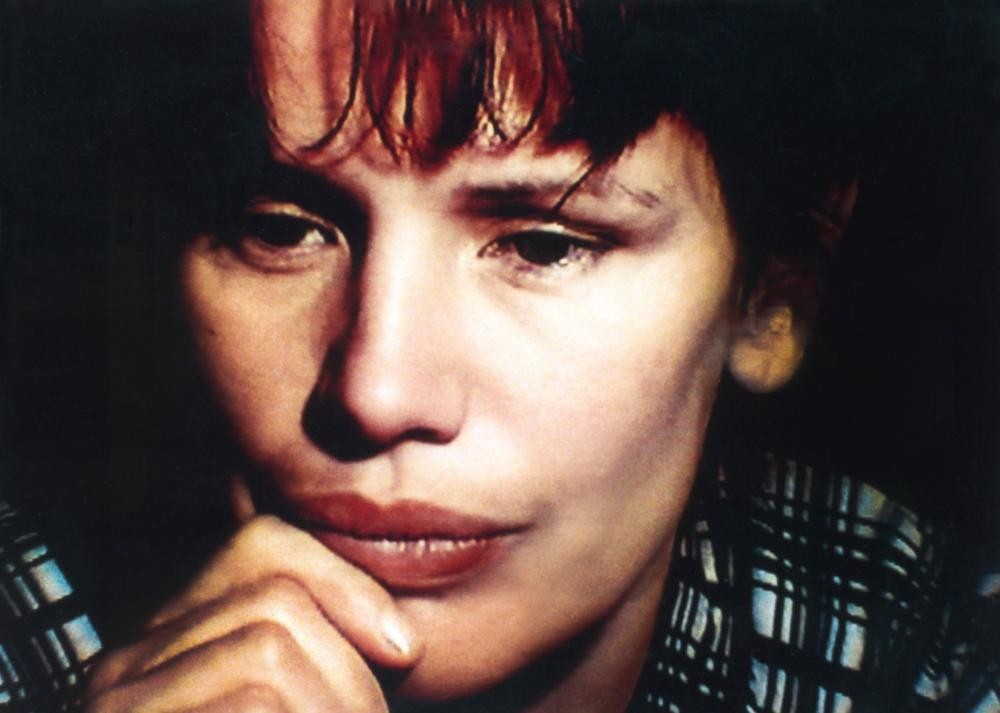
I was a boarder at the Lycée Français in Algiers, a magnificent castle in a park where foreign students from all over the world met. It is an unforgettable experience for me because I took a little insurance and was a little safe from the exacerbated authoritarianism of my father. In this wonderful place on the heights of Algiers, I was able to fully blossom. I was a very good student, ahead of my studies and my mother had decided that I would become a surgeon. My father saw me more as a lawyer. I dreamed of a romantic life: to spend time as a teacher in the desert, or to learn cinema in Russia. My father totally opposed it and used his diplomatic relations to block my file. As I was a minor, I was forced to comply… But I still managed to pass the entrance exam to the Fine Arts of Algiers on the sly and as I was received, I went on strike starving for a week to get to attend fine arts classes. In return, I had undertaken to still pass my 2 baccalaureates, the French baccalaureate and the Algerian baccalaureate, by working the 2 (different) programs in the evening with correspondence courses.
I was able to have my first cinema experiences in Algiers (as an actress, script girl and decorator) and also participate with other friends in my first collective exhibitions. I was in a hurry to take charge of my life and I had negotiated that after obtaining my baccalaureate, I would have the right to go to Paris to continue my studies of architecture. Subsequently, I often returned to Algiers, first as an architect in agencies in the summer, then as a director to shoot a documentary. “Lost Reflections of the Mirror”, which was produced by ARTE, Canal + and France 3. At the time I was working as a reporter at GammaTV and was already presenting several programs on French television. It was very difficult at the time to receive filming permits. Even Algerian television, which was to be a partner, did not help much. Subsequently, I returned to Algeria to participate in theater festivals to present a staging, according to my adaptation of the play by Arezki Metref “Splendides exilées”. The first year at the “Raconte-arts” festival and then at the Béjaïa international theater festival. Subsequently, I wrote and staged my own plays in Paris: “Heureux comme un roi” at the Halle aux cuirs theater in La Villette and the following year “Clandestine Escapade” at the 104 theater. The Covid has completely halted the planned tours. Currently, I am completing my third piece “Macadam” about the story of a woman painter living on the street. This piece was inspired by the life of the marvelous Tunisian painter of raw art: Jaber for whom I organized several exhibitions (one in January 2022 with Belleville Galaxie) and the next in July at the Terrain gallery Vagh, near the Arab World Institute, where I also plan to exhibit Jaber in a few months. as far as my activity as a painter is concerned, I now exhibit very regularly in Paris but it is more difficult to exhibit in Algiers, where female artists are not very well supported by galleries. It is to be hoped that mentalities are changing…

2
You traveled to study and work with the famous Egyptian architect Hassan Fathy. What is the impact of this experience on you? Catherine Belkhodja and Architecture in Egypt and Old Cairo I am sure that you have a lot to tell us about this matter, especially since your literary career has developed a lot after your return from Egypt.
I discovered the work of Hassan Fathy when I specialized in bioclimatic architecture. I had read his book “Building with the People” and I had also seen the exhibits on “Earth Architecture”. I followed the international congresses on these themes with the hope of meeting him, but he always withdrew at the last moment. I then decided to apply for a scholarship to study for a year in Egypt and I had the joy of being selected. Unfortunately, the scholarships were slow to be paid to the students and I had to find work very quickly to survive while waiting for the scholarship to be paid. I worked as a correspondent journalist “culture section” and was also able to meet and work a little with Youssef Chahine who needed a French secretary for his letters. Subsequently, this experience was fruitful because when I needed to find my first internship in scenography, he was kind enough to accept me in his team when he was putting on his play at the Comédie Française! It’s quite funny because we met by chance in the metro, at the “Pyramides” station and since we already knew each other, his agreement had only taken a few seconds! We can not invent this kind of anecdote!
I was therefore very happy to meet Hassan Fathy in Cairo to interview him and possibly work with his team. but I met a very tired gentleman who especially needed to rest. He took long naps in his armchair with little kittens resting on his stomach. it was the good excuse not to move because he explained that he was afraid to wake them up!
So I decided to go to Luxor anyway to discover his work. There, I met two of his disciples: Olivier Sednaoui and his friend David. Olivier built his earthen house according to the principles of Hassan Fathy and lived very simply on pace. I stayed several months in Luxor, making frequent round trips to Paris.
At the time, earthen architecture fascinated everyone but in the agencies, it was quite different. I continued my research in bioclimatic architecture with Luc Schuitte, based in Brussels. This one now makes magnificent exhibitions all over the world. I also met his brother Françaois who was still a student in comics, before becoming famous with the series of “Obscure Cities” in collaboration with Luc who drew all the architectural drawings in the series. With them I also met Benoît Peeters (the screenwriter of “Cités obscures” and his companion Marie Françoise Plissard, a very great photographer. They had chosen me as an actress for their book published by Editions de Minuit, then for their first short film, which had been selected at the Berlin festival.This friendship has lasted for many years.After several books, Marie Françoise now takes superb shots that will decorate the slabs of the Brussels metro.Benoît has become a publisher and a great specialist also in work of Tintin and comic strips in general. Recently he gave lectures at the Collège de Fance on Arab comic strips.
you can’t say that my literary career developed in Cairo because then I rather wrote articles for “Le Sauvage” or “Sans frontières”. but I was able to make my debut as a filmmaker (it was quite catastrophic because on the days of filming, we were treated to a sandstorm!) but it was a baptism of fire! Subsequently, I was surprised to see a report on Olivier Sednaoui directed by Jocelyne Saab, and which I was to present on my TAXI show. I had to correct the names that were on my file because I had recognized Olivier’s work well, but my assistant had made a mistake and had given me another name. It took the intervention of the Egyptian Ambassador to decide between us and I was able to win my case!
I went quite naturally from newspaper articles to writing. At the time rather in the form of short stories or scenarios.
3
Catherine Belkhodja and Surrealism, you recently participated in the International Exhibition of surrealism in Cairo
What many do not know is that there is a close relationship between surrealism and Catherine Belkhodja .
We want to know the details of this relationship,
And what can surrealism offer to a present saturated with wars and environmental destruction?

I could not say very exactly what binds me to surrealism, except that my imagination naturally feeds on this movement. on the other hand, I do not belong to any chapel and keep myself away from the great debates which divide the various movements of surrealism throughout the world. I practiced different genres: exquisite corpses with rain, automatic writing, drawing lots .. with the same experiences for painting. On the other hand, I have no claim to any representativeness of this movement. It is my internal kitchen, which nourishes and inspires me. it would be more up to the specialists to say if I am an integral part of this movement or not, even if the labels do not matter to me because art must above all remain alive. Everyone knows for himself in what degree of sincerity he is when painting.
Unfortunately I remain quite pessimistic about what any artistic movement saturated with wars and environmental destruction can bring. Artists have a devotion to awakening and watching, through their writings or their works. But the arms lobbies ensure that wars are renewed regularly so as to consume the prodigious investments that are made. Nowhere will you find so much planned obsolescence. planes and bombs cost billions and are destroyed in a few seconds… So we can design new ones even more expensive and the manipulated peoples rejoice in the weapons that are supposed to defend them. Diplomats are still dragging their feet on finding a peaceful solution. during this time, thousands of deaths maintain the panic… And it does not end there… the artists must protest even if their words are rather little taken into account… but we must not give up for all that…
4
You have started a film production company
“Karedas”
But after that, the company’s activities diversified to include literary and cultural activities, such as the establishment of the Kaiseki Group
Dedicated to haiku poetry
The company subsequently co-founded an award of haiku poetry.
How does Catherine Belkhodja see the haiku poem and its development around the world in various geographical places, and do you think that the haiku poems in their Japanese concept are valid to integrate into all literary cultures?
I set up this production company to have a work tool and save time on my filming projects. I realized that I only found a producer when I had done the funding search myself. So, all of a sudden, the productions were trying to seduce me to do my project with them… They were costing me 40% of the budget without any benefit in return. I decided to set up my own production company, initially taking on my children as partners. Then Chris Marker came to join us and we co-produced his first fiction film “LEVEL FIVE” of which I was also the main actress and the co-writer for my own dialogues. This left us a lot of flexibility to work. When the film was finished and appreciated, ARTE took over as producer and distributor. At the end, ARTE even said in the credits “ARTE presents” and was content to put thanks to KAREDAS, who nevertheless carried the film from start to finish. But as it was our first film as a feature film producer, I lacked experience and accepted that other companies appear as executive producer (ARGOS and ASTROPHORE)
In reality, from the start, I had planned a very extensive object “literature, music, communication …) so that the company allows to achieve everything we wanted. Moreover, we started our activity with the publication of a book on architecture (with François Roche). The book was so successful that it was quickly sold out. This book which had been refused by all es publishing houses, finally caught the interest of the French Institute of Architecture, which offered me to co-publish it. I did not imagine then that this publishing house would take all the money brought in by this book in content to give us 10 copies! Neither Chris nor I was used to the business world and our beginnings were quite difficult because our partners won the day with indecent contracts because we were not suspicious! We also created the kaiseki collection for the publication of haikus, tankas or haibuns. launched the price of best haiku of the French language “MARCO POLO”? that we kept for many years. I had created a partnership with several major tourism companies so that our winners were entitled to trips to Asia, perfumes and very prestigious gifts to which the winners of poetry competitions were not accustomed. These partnerships took a lot of work to establish and the winners sometimes were not satisfied because people always want more. I found it easier then to stop everything. This left me more time for my personal creation
I think haiku can really adapt to different cultures around the world. Thus, I was able to give a conference in Quebec on the place of haiku in Africa, where it is not very present, except in Senegal. It turns out that a former Japanese ambassador had created a haiku school during his stay in Dakar. his courses have borne fruit and have given rise to a collection of Senegalese haiku authors. They have the same respect for the rules to respect for the haiku but bring colors and sounds which come to enchant their haikus. Not valued at first when they took part in the French-speaking haiku contest, they are gradually taking their place. The haiku in English is very widespread and has a lot of success. the writing groups are very well organized and publish regularly in specialized journals. French-speaking haiku is also developing very well with new small publishing houses that are releasing limited edition works, since digital printing makes it possible to publish a limited number of copies almost to order. Various associations publish regularly and bring together 200 to 300 regular haikists. The German haiku is also doing well and has specialized editions. The problem we encounter is often a translation problem because if the translator does not write haikus himself, he can offer somewhat heavy translations… This is the major problem encountered with texts translated into very bad French.
Relations between French and Japanese haiku magazines are developing more and more and their texts are exchanged. There are also news letters that allow you to keep up to date and since the Internet has become a daily practice, many groups exchange haikus every day, on a free and determined theme…

5
You started your life by writing short stories, why didn’t Catherine Belkhodja write the long novel? Is long narration a literary form that does not suit you, especially since you have practiced all other types of literary writing?
It is true that short writing fits well. First of all because for years, I had to reconcile my work, my artistic research, training workshops, my reports in Asia and… my family life too which took me a lot of time because I invested myself a lot in the artistic education of my children. I had several times started writing a novel but lacked discipline in the middle of all these activities. Now that my life is a little more settled, I may be able to consider writing with more “follow-through.” I started with the theater with my three plays but it is not impssible that I turn one day to writing a novel. Who knows ?
6
We all know the nature of the difficulties that independent cinema faces in the Middle East, but in your opinion, what are the difficulties that independent cinema may face in Europe, especially after the war in Russia and Ukraine?
And your artistic work have always been associated with global /humans crises, are you thinking of making or supporting an artistic activities related to the war in Ukraine
The various crises that have marked the entertainment world remain quite difficult to overcome. the big companies, supported by the state even when they were not working, are doing quite well. But small companies are dying. the same in the cinema. The cinemas closed for months created a serious distribution problem. Big-budget films do well, but “small, fragile films” are eliminated from the screens if they do not have a minimum admission on Wednesdays at 2 p.m.! After this crazy war period, all the money will go to arms and the cinema sector will unfortunately die. As an artist, I do what I can: I participate by donating works for auctions for the benefit of Ukraine. but as a citizen of the pacifist world, I try despite everything to bring my voice to this deadly global escalation!


 SULFUR EDITIONS
Leave a comment